Category: Uncategorized

Our New Community Engagement Module 

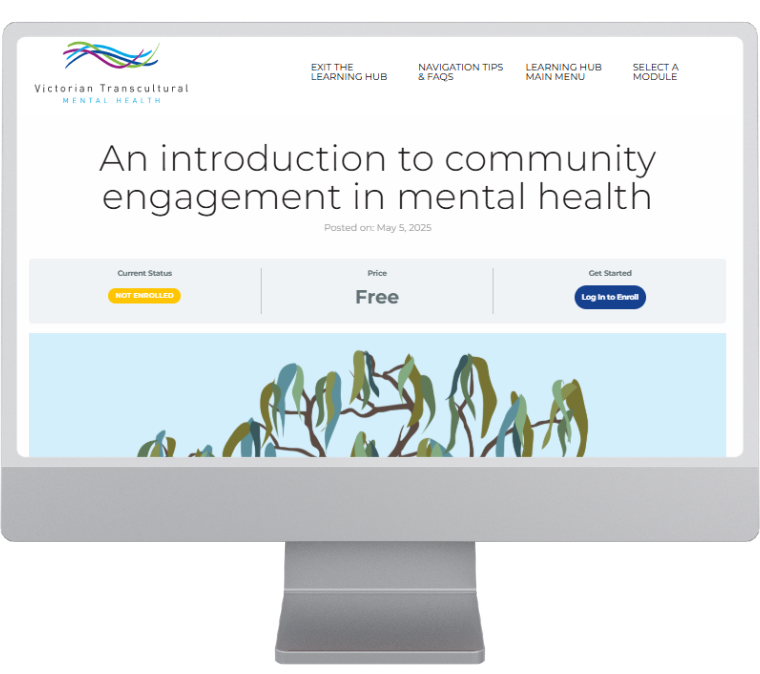
We’ve put together a brand-new learning resource: Introduction to Community Engagement in Mental Health.  


Available on our new, redesigned Learning Hub, this module is a starting point for mental health practitioners interested in exploring community engagement in mental health settings.

Introduction to Community Engagement in Mental Health considers what taking a community focus could look like in mental health, highlights histories of community care, and explores what is meant by the notion of community.    

We also explore types of engagement, when to engage, and practical tips that will help engagement. We highlight how community engagement is being considered in mental health at a system level, in keeping with the current mental health reform. This is all done through text, video, and infographics. 

Some of the resources in this module were developed through VTMH’s Community Engagement with Purpose Resource Project and complements VTMH’s Community Engagement with Purpose: Approaches to Consider in Mental Health Settings workshop.  

We would like to acknowledge all those involved in the production of the Community Engagement with Purpose Resource project, as well as the generous feedback we have received from the sector which has informed the content of this online module.  

In the spirit of lifelong learning, we hope this module adds value to your continued learning journey. 

The Office of the Chief Psychiatrist Quality and Safety Forum 

In March, VTMH participated in the Office of the Chief Psychiatrist Quality and Safety Forum. Justin Kuay, Consultant Psychiatrist and Thomas Nguyen, Psychiatry Registrar attended the forum on VTMH’s behalf.  

Representatives from major public mental health services, statewide specialist mental health services, and the Victorian justice system, met to discuss ways to approach collaborative management of consumers with complex mental health issues.  

Gathering together to gain a better understanding of different services, representatives were able to promote and explain the value of their work. Justin had the opportunity to advance and emphasise VTMH’s work towards cultural responsiveness across the Victorian mental health sector in any setting.  

The forum included presentations from the Statewide Complex Needs Advisory Panel, consumers and carers with Lived and Living Experience and representatives from the Secure Extended Care Unit. There was also a speaker debate, and round table discussions.  

With over 20 statewide services from across Victoria, the forum reinforced the benefits of referring or seeking a secondary consult with statewide services, and the benefits of working collaboratively across the existing, available services. 

We’ve updated our Learning Management System 

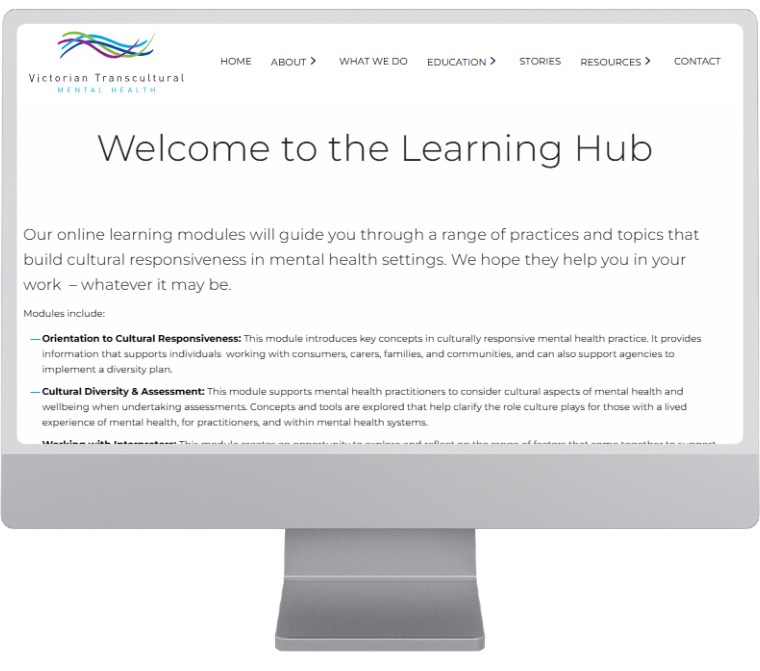
We are proud to announce that we have a new online Learning Management System (LMS).  


With the help of Blick Creative, we’ve installed a new LMS and have rebuilt each of our learning modules in the new system. 

We’ve also updated two of the modules with the most recent knowledge from the sector, and we’ve created a new module, Introduction to Community Engagement, which will help practitioners to explore community engagement in mental health settings.  

The new LMS has a smoother design which enables our learners to more easily navigate and complete the modules. It also offers better statistics around completions and other engagement metrics, which will help us quickly adapt and respond to learner needs.  

With a more adaptable and easier to administer backend, the new LMS will enable us to stay up to date with new knowledge, research, expertise, and materials.  

The updates to two of the modules, Cultural Diversity & Assessment and Approaching Work with Interpreters in Mental Health Settings, are extensive. New content, such as videos, imagery, and the latest frameworks and research, has been added to both. We hope to carry out updates to other modules in the coming months, and, with the new system, we will be able to update all the modules more regularly.  

Through the new system, the updated modules, and our new module, our Learning Hub is better positioned to meaningfully add to the knowledge and experience in the sector.   

We encourage our community of mental health practitioners to create an account, if they don’t already have one, and expand their knowledge of culturally responsive practice. In the spirit of lifelong learning, we hope we can contribute to the sector’s continued learning journey. 

Upgrades to VTMH’s Interactive Online Learning Hub 

For almost 10 years, we have produced online learning modules covering a range of topics that support culturally responsive practice in the mental health system. We’re currently in the process of upgrading our Learning Management System (LMS) so that we can continue to provide easy to access online learning modules for years to come. 

What’s new? 

The LMS’s user interface is undergoing several enhancements which will make it easier to use. We’re improving the navigation and sign-up process and adding new features such as the ability to download a certificate of completion.  

We’re also updating the content itself by incorporating emerging knowledge and updates following the Royal Commission into Victoria’s mental health systems. This new content includes a range of new frameworks that have been released to support work in the area of cultural responsiveness.  

We’ve even created a brand new module, An Introduction to Community Engagement in Mental Health Settings. It includes information from our 2023 Community Engagement with Purpose: Approaching Community Engagement Work in Mental Health Settings project and complements the existing workshop on the same topic as a pre-learning resource. It will be made available once the new system launches.  

What are we keeping? 

The modules will remain free and self-paced, so you can log in and out in your own time, making them convenient to complete around your workload. Many of the modules will continue to act as pre-learning for our in-person workshops.   

If I have an account already, what do I need to do? 

Once we have transitioned to the new LMS, all existing users will be notified by email with instructions on how to access and manage their new profile.  

When will these changes take place 

We will begin to roll out the updated system and content in the early months of 2026.  

VTMH Forum 2025 

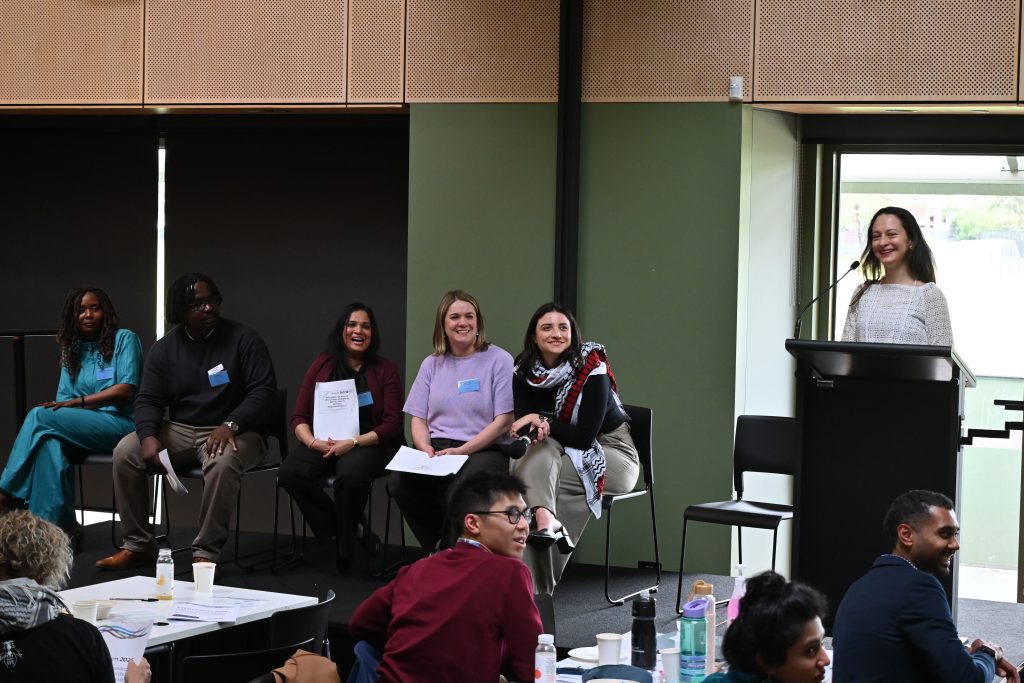
We held our 2025 forum on 6 November. Over 100 people from across the sector gathered to explore this year’s theme: Practice and Research Innovations Towards Culturally Responsive Systems. 

With over 19 speakers, including keynotes Kathomi Gatwiri and Indigo Daya, the day was full of discussion and celebration. 

In the words of MC Tharindu Jayadeva (TJ), we were “tough on systems, gentle on each other.”  

Daya was the first keynote to speak. She outlined some of her work and research, discussing the nuanced tension between reform and abolition. She made the point that “we’re responsible to each other and not for each other” Her presentation sparked a vigorous discussion among attendees that carried into the break. 

Gatwiri’s talk came later in the day. Focused on her Racial Dignity Framework, it spanned notions of unconscious bias, personhood, and the idea of dignity as a liberatory practice. “Dignity is not debatable,” Gatwiri said, underlining the importance of her work.  

A clear theme of the importance of dignity emerged. Left, Write, Hook provided a history of their creative and peer-led roots. Chris Williams, Liz Arcus, Thuch Ajak and Dwij provided an overview of the ways in which appropriate food gardening practices can create culturally safe spaces.  

The intersections with ideas of dignity and justice and the importance of culturally responsive practices in interpreted encounters were emphasised by Blossom Ah Ket, Nari Kim and Susan Esmaili. Focusing on the role of interpreters in mental health settings, they made the point, among others, that many interpreters can see clients more often and with more consistency than some clinicians.  

Malitha Perera, whose presentation centered on the spectrum of restrictive practices and involuntary treatment, which he noted were racialised in Australia, commented that the forum was the most culturally diverse he has been to this year. Many other speakers and attendees echoed this sentiment.  

The passion and expertise of our small corner of the sector was extraordinary. We would like to give a full rundown of the day, shouting out each speaker, but there’s simply not enough space. The full program outlines the strength and diversity of speakers and their presentations.  

With such a range of perspectives from so many speakers with different ideas on how to approach dignity within the mental health system, we were happy to be challenged and invigorated by the points of tension that were raised. These kinds of issues require open discussion, and we are proud that we were able to facilitate it. That so many people were able to gather together and encounter ideas that they may find challenging is a testament to the openness of our sector.  

We’d like to thank everyone who was involved, from speakers to audience members. The forum was supported by artist and visual scribe Debbie Wood, MC Tharindu Jayadeva, and Mandy Nicholson who delivered the Welcome to Country.  

VTMH Partners in Diversity: Eating Disorders Victoria  

VTHM and Eating Disorders Victoria (EDV) entered into a partnership through VTMH Partners in Diversity (PiD) program in mid-2023. The PiD program provides the opportunity for VTMH to work with publicly funded mental health services who are committed to embedding cultural responsiveness within their organisations and service delivery. 

Partnerships usually take place over a period of three years, before moving into a sustainability phase whereby the service continues to progress on the work that has been carried out during the PiD program.  

As part of this program, EDV have engaged in a range of activities including successful advocacy for access to interpreters which has not been possible in the past. An interpreter policy has also been developed and implemented internally alongside a Diversity and Inclusion policy which was developed with the support of EDV’s human resources department.  

EDV’s commitment to embedding Reflective Practice across the organisation has led to a program of experiential reflective practice sessions for leadership. It is intended that, through participation in Reflective Practice, leadership would be better positioned to consider ways of integrating reflective conversations with their teams, in addition to having greater confidence to hold these spaces and support these conversations.  

VTMH’s self-paced, online modules have been incorporated into EDV’s onboarding for new staff as well as their induction manual. They are also in the process of reviewing and updating a number of policies and procedures to support considerations and practices relevant to cultural responsiveness.  

VTMH has engaged in a number of workforce development initiatives across the life of the partnership. Most recently delivering a full-day workshop on recovery and diversity, which was complemented by our Cultural Diversity & Assessment online module. These intensive workshops have given participants a chance to learn and work with VTMH facilitators, providing the opportunity to fully engage with and explore the content. 

Embedding cultural responsiveness within services requires a long-term commitment and engagement from both the partnership organization and VTMH and provides a rich learning opportunity for everyone.   

New Lived and Living Experience project  

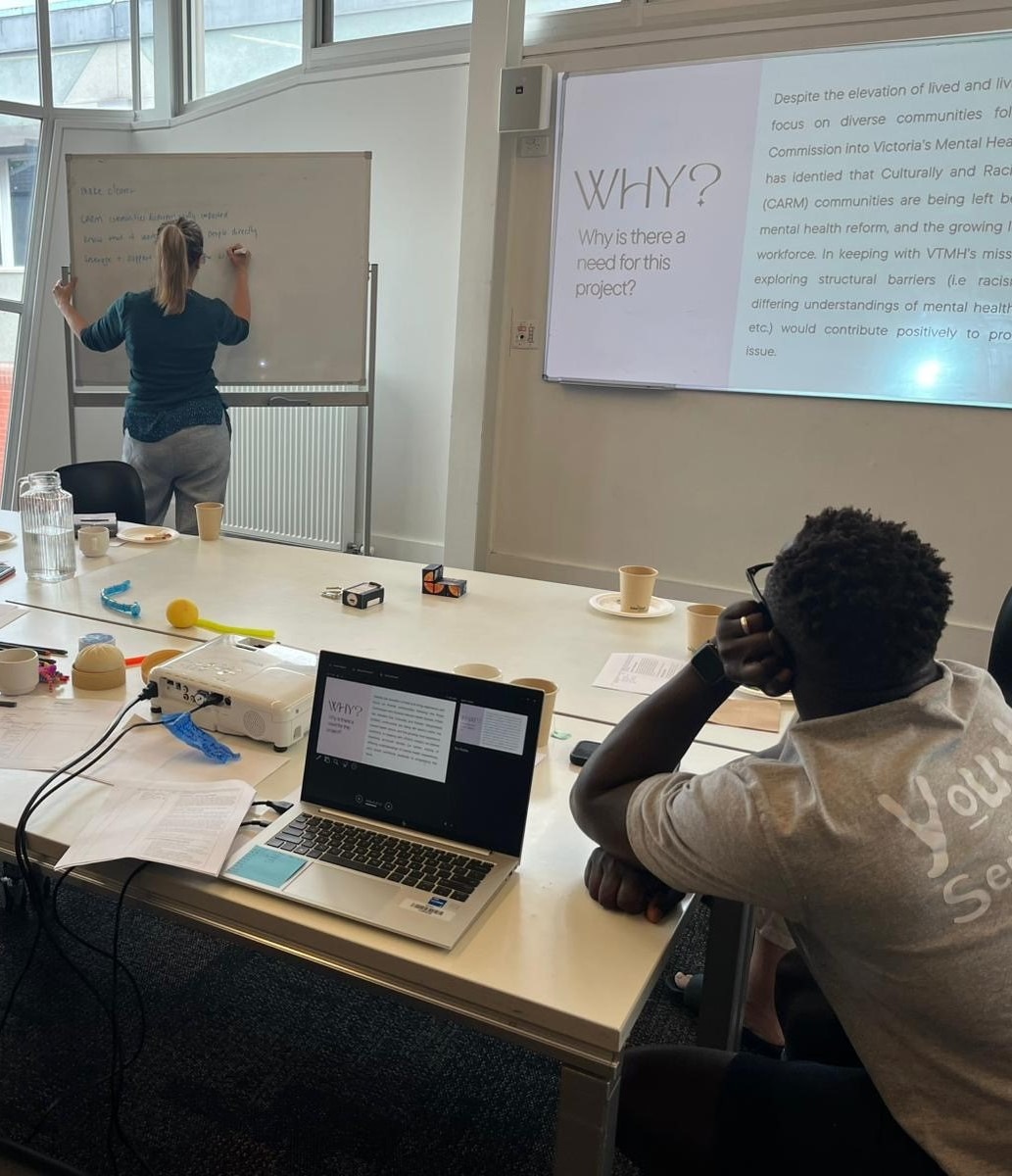
VTMH is working on a new co-designed project that seeks to identify the range of factors that lead to the “invisiblising” of experiences of cultural and racial marginalisation within the Victorian lived and living experience workforce. 

Both lived and living experience, and diverse communities, have been highlighted as priorities in the Royal Commission into Victoria’s Mental Health Systems (2021). However, the Our workforce, our future capability framework acknowledges challenges for services in both engaging and supporting diverse lived experience workforce members: 

Some workforce groups face additional challenges. These include those working in rural and isolated services, lived experience workforces and workforces with diverse identities such as Aboriginal practitioners, LGBTIQ+ practitioners and culturally diverse practitioners. We know we will need tailored approaches to create safe and supportive working environments for these workforce cohorts.” (Department of Health, 2023, p.16) 

We have identified that there is no clear articulation of what these additional challenges may include, how these additional challenges might be identified, or guidance for services or the broader mental health system on how to address them.  

The first stage of the project has brought together an Advisory Group, comprised of individuals with diverse intersectional professional and personal experiences and involvement with mental health care systems in Victoria.  

In later months, we will be consulting widely across the sector to identify recommendations which will inform resources that address system-level barriers and enablers in this space. 

VTMH Forum 2025: Practice and research innovations towards culturally responsive systems 

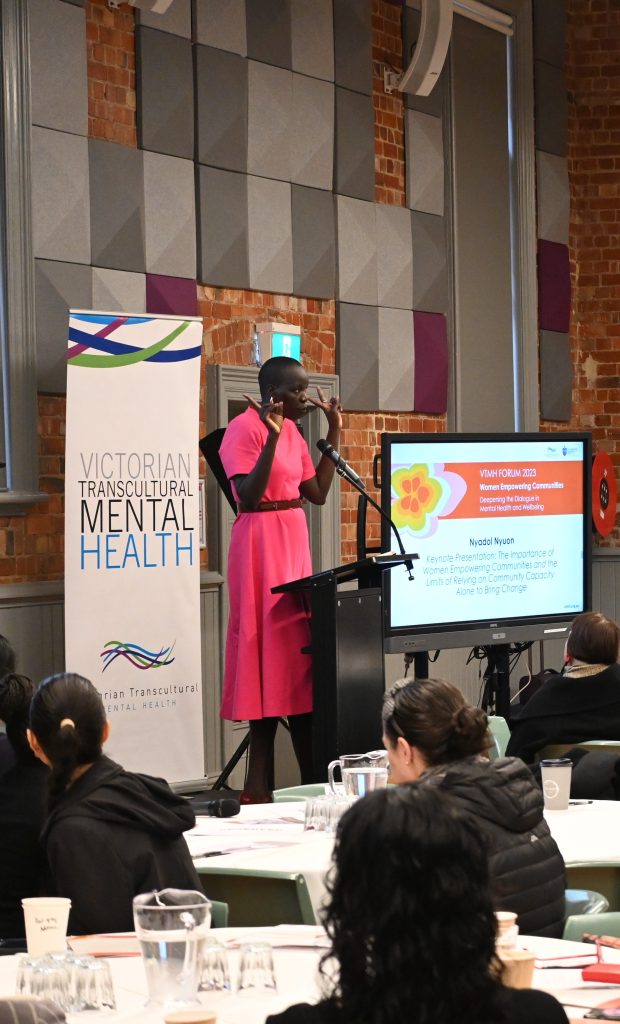
Nyadol Nyuon OAM, presenting at the 2023 VTMH Forum.

On November 6, Victorian Transcultural Mental Health (VTMH) will hold its biennial forum at the Djerring Flemington Hub. The theme of this year’s forum is “Practice and research innovations towards culturally responsive systems”. 

Across Victoria, there is innovative thinking and action that strengthens the cultural responsiveness of our sector. This forum is an opportunity to shed light on the variety, richness, and challenges of that valuable work. We will focus on the experiences of dignity and indignity in mental health interventions through the lens of communities, clients and service providers.  

The forum will feature keynote speakers Indigo Daya and Kathomi Gatwiri, two of the sector’s most innovative and thought-provoking voices.  

Daya is a research scholar and activist, informed by her own experiences with the mental health system. She practices independent peer support, training and co-reflection, and works with others to grow liberatory alternatives to psychiatry.  

Gatwiri is one of Australia’s leading Afro-diasporic scholars whose award-winning interdisciplinary research investigates the intersecting topics of racial trauma, belonging, blackness, and migranthood.  Her work is grounded in decolonising methodologies that attempt to develop knowledge about and for those people who are assigned categories of difference.  

We look forward to announcing the rest of the program once it is confirmed. 

Leading the forum committee for VTMH, Education and Service Development Consultant Radhika Santhanam-Martin commented, “While there has been some progress in developing culturally responsive systems, there have been equally persistent challenges. VTMH, through this forum, wants to highlight the current research and practice efforts that are moving towards prioritising respect and dignity as the foundations of effective and ethical care in mental health.”  

Mental health practitioners, educators, researchers and leaders, and health and community workers with an interest in mental health are invited to register. The forum will give us a chance to come together and nurture our connections, reflect on our practices, and learn from each other.  

Registrations will open in the coming months. Space will be limited so we encourage all who are interested to stay tuned for the announcement. 

VTMH and KCV’s Community Advocate program  

Victorian Transcultural Mental Health (VTMH) has been working with Kenya Community Victoria (KCV) to engage the state’s Kenyan community on mental health issues. 

The project began in 2024, with VTMH and KCV planning out the initial stages for the project and officially beginning the partnership.  

The team identified the effectiveness of community advocates who can enhance their mental health knowledge and channel that energy and expertise back to the community.  

Community members were invited to complete a form which assessed their mental health knowledge, including asking after their ideas of the mental health issues specific to their communities. This form acted as a way for the team to measure interest in the project and will help to inform future design decisions.  

Almost forty community members completed the form, showing a strong interest in improving mental health knowledge and outcomes.  

Of particular interest to the team were respondents’ insights into what they saw as the biggest barriers to better mental health outcomes in their community.  

Stigma, a lack of awareness and knowledge, cultural beliefs, a lack of culturally safe services, and financial constraints were among the barriers and issues that were raised by potential advocates when filling out the form.  

Education and Service Development Consultant Abie Jazi commented, “This situation is quite common in similar communities, and we observe these issues across different cultures, including my own Zimbabwean community. However, knowing that it is occurring here as well, along with evidence from the Kenyan community members, provides us with valuable information to work with. Developing culturally responsive programs necessitates this kind of detailed understanding” 

Consumer Consultant Naomi Chapman, who designed the form for potential advocates, commented on the complexities of getting the right information for the program:

“The Kenyan community in Victoria spans all areas, including regional areas. We wanted to make sure we were getting a group of potential advocates who would be representative of the state. We’ve got advocates from almost everywhere, all with varying degrees of mental health knowledge and experience. We’re happy that we’ve got a few mental health professionals as advocates who will help guide the project.” 

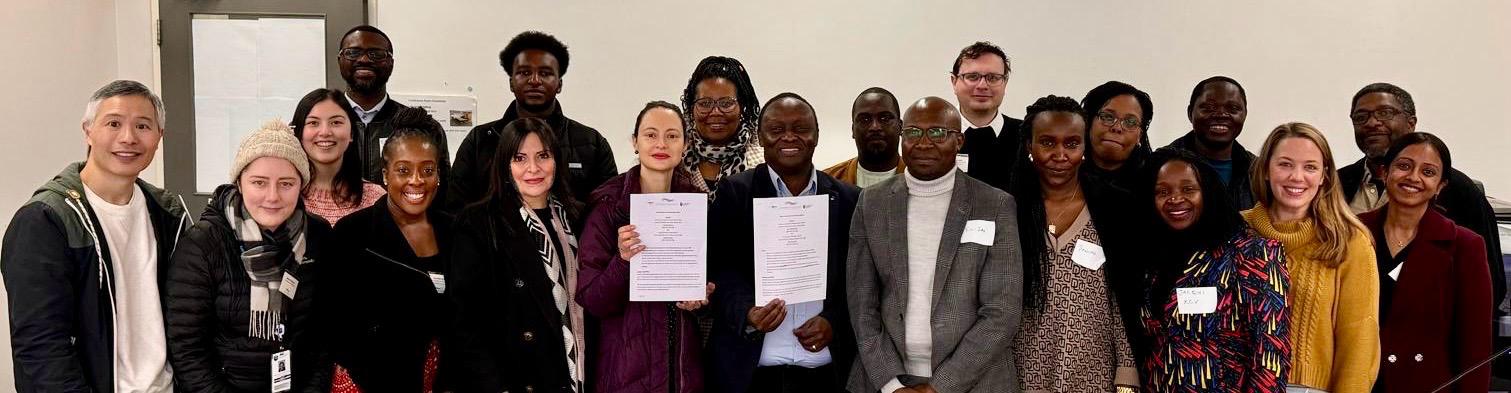
After advocates were selected from the pool of community members who completed the form, an introductory meeting was held with the advocates, VTMH staff and representatives from KCV.  

Justin Njuguna, former chairperson of KCV whose passion for community work and mental health helped spur the project on, commented on the enthusiasm of advocates at the introductory meeting:  

“The high attendance of community members for the first meeting was encouraging and inspiring. Their willingness to have open, candid and engaging discussions, including sharing ideas, experiences and suggestions reflects a real need for this project. I’m looking forward to the future [of the project] with anticipation and excitement.” 

Advocates will continue to meet with VTMH staff members and representatives of KCV. They will work on a range of resources and projects which we will share as they come to fruition.  

Summary of VTMH seminars in 2024

This last year, we’ve held six seminars for the mental health sector. We’ve enjoyed the company of over 400 attendees from across the sector.

We started the year with Empowerment thought community-led responses to racism, focusing on a project co-designed by Victoria University, Wyndham City Council, and the Wyndham Community and Education Centre to combat racism within communities. Tom Clark led the seminar, presenting the work of the project and leading discussion on how similar networks can be developed and deployed.

In April, Simon Katterl led the seminar Not before Time, Lived and Living experience-led Justice and Repair. The seminar explored the report of the same name, which examined harms caused by the mental health system.

Andrea Vancia and Michelle Ravesi presented the PHN Multicultural Health Framework: A national approach to cultural responsiveness in June, providing an overview of the PHN Multicultural Health Framework and showcasing PHN activities.

Tackling stigma in the news media: Our latest research findings was held in July. Presented by Anna Ross, the seminar gave an overview of her research into the ways in which people with complex mental illness are portrayed in the media.

In August, Charles Foster presented Harms, Hope and Horizon: Out of Sight, Out of Mind report. He outlined the issues and proposed actions from the report, exploring inequities and barriers to access faced by people seeking mental health treatment in regional and remote Australia.

The year’s final seminar, held in November, was led by Meena Nathan, Ikran Aden, and Lena Ford. Titled The Cultural Engagement Program: A journey into supporting children, young people and families from multicultural and multifaith backgrounds through culturally responsive practice, the seminar presented the program’s findings and outcomes.

Next year, we’ll have many more seminars from a vast array of speakers. Stay tuned for updates by subscribing to our mailing list.