
Event Category: Seminar

VTMH August Webinar 2026

SPEAKER

Yonas Mihtsuntu, Senior Practitioner CA, Adult & Families (The Victorian Foundation for Survivors of Torture Inc.)

Topic

The research explored knowledge, attitudes and practices towards suicide among immigrants from five countries of the Horn of Africa in Victoria, Australia.

In this presentation, the presenter will share information about the target population, the drive behind the research, the research questions that were asked to help identify the risk and protective factors of suicide specific to these communities, and reflections on the challenges and opportunities of conducting community-based research.

The presenter will then share important findings of the research that include the participants’ knowledge of suicide incidence, causes of suicide and support options to prevent suicide; their attitudes on the perception of suicide as an issue, the judgements towards suicide, and whether they believe suicide is preventable, if so where and how; as well as current community practices in dealing with suicide. There will be discussions of key themes from the findings followed by recommendations that could contribute towards effective and culturally sensitive interventions.


About the speaker

Yonas Mihtsuntu has post graduate qualifications and is a clinical counsellor, holding full membership of the AASW and AMHSW. He has more than 17 years of professional mental health experience. He has worked in mental health services, both in community and private practice settings in Victoria and NSW. He is currently working as a Senior Practitioner with Foundation House. He has conducted research in the areas of mental health carers and refugee/immigrant communities.

The presenter also acknowledges his co-authors, Keflemariam Yohannes and Arhet Gebrat, who are also mental health professionals.

VTMH webinars are open to individuals, from all disciplines and working in all sectors, who are based in Australia and interested in diversity and mental health.  

Please note, Trybooking is no longer supported by Internet Explorer so you will have to use another web browser such as Google Chrome, in order to make your booking.
VTMH June Webinar 2026

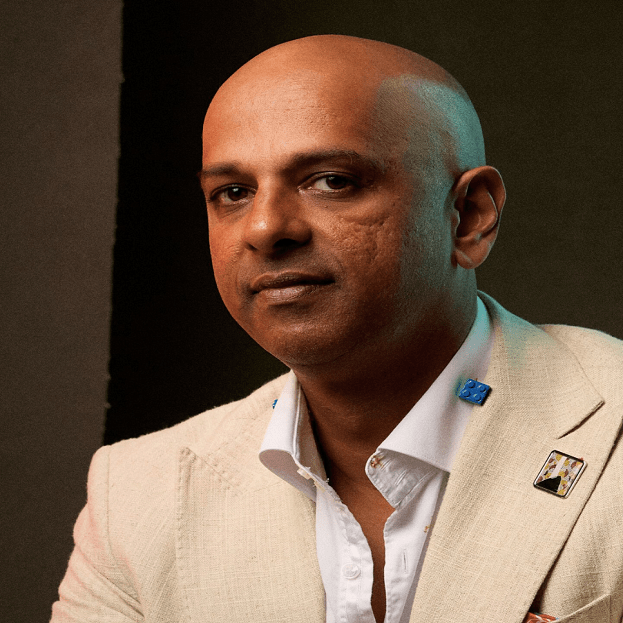
SPEAKER

Jasmine Phillips (Bicultural program lead, cohealth)

Topic

The Victorian Bicultural Workers Network (VBCWN), facilitated by cohealth’s Bicultural Program, has launched a new podcast series, Listening Across Cultures: Bicultural Perspectives on Mental Health.

The podcast creates space for Bicultural Workers (BCWs) to share knowledge and insights from their communities about mental health, wellbeing and experiences navigating mainstream services. Through these conversations, the series explores how culture, migration experiences, language and community connection shape understandings of distress, healing and recovery, while also highlighting shared experiences and strengths across diverse cultural communities.

In this presentation, podcast host and cohealth Bicultural Program Lead Jasmine Phillips will share emerging themes from the interviews — including the strengths and leadership within communities, common challenges when engaging with mainstream systems, and BCW reflections on what more culturally safe, community-led responses can look like.


About the speaker


Jasmine is a community development and engagement expert and a qualified interpreter. She has extensive experience working in Australia and internationally with multicultural communities, specifically refugees and people seeking asylum. Jasmine is passionate about community-led, strength-based, intersectional practice and cultural safety. 

Since 2017, Jasmine has worked at cohealth where she developed and continues to lead the bicultural program. Through this role, Jasmine has worked in collaboration with bicultural workers from diverse refugee backgrounds to develop the professional standards for bicultural work, policies, tools and training to build sector capacity to employ bicultural workers in ways that are culturally safe, and community led. Jasmine and her team also host a network of over 500 bicultural workers from across Victoria and offer targeted capacity building, peer support and reflective practice for these workers. 

VTMH webinars are open to individuals, from all disciplines and working in all sectors, who are based in Australia and interested in diversity and mental health.  

Please note, Trybooking is no longer supported by Internet Explorer so you will have to use another web browser such as Google Chrome, in order to make your booking.
VTMH April Webinar 2026

SPEAKER

Giridharan Sivaraman – Australia’s Race Discrimination Commissioner, Australian Human Rights Commission

Topic

The National Anti-Racism Framework (the Framework), is a comprehensive, ten-year, whole-of-society roadmap designed to actively identify, challenge, and dismantle racism. Developed through extensive consultation with First Nations and multicultural communities, the Framework includes 63 recommendations targeting key sectors, including health, education, the justice system, and workplaces.

The Framework recognises racism as a driver of poor mental health and a public health crisis. Research shows a direct link between racist experiences and high psychological distress, anxiety, depression, and increased suicide risk.


About the speaker


Giridharan Sivaraman commenced as Australia’s Race Discrimination Commissioner in March 2024. Prior to becoming Commissioner, he was Principal Lawyer with Maurice Blackburn where he led the firm’s Queensland Employment Law department. He also held the position of Chair of Multicultural Australia from 2021-2024 and was a member of the Queensland Multicultural Advisory Council from 2019-2024, where he was an advocate for the rights of victims of racial vilification.

Commissioner Sivaraman was born in India and migrated to Australia as a child. His anti-discrimination legal and advocacy work is based on his strong passion for human rights, as well as his moral conviction to speak truth to power and fight for the rights of the marginalised, oppressed, and vilified.

The Race Discrimination Commissioner is a statutory position within the Australian Human Rights Commission. Under the Racial Discrimination Act 1975 (Cth) (RDA), this position is responsible for promoting equality between people of different backgrounds, conducting research and educational programs to combat racial discrimination, and protecting people from unfair treatment or vilification on the basis of their race, colour, descent, visa status, or national or ethnic origin.

VTMH seminars are open to individuals, from all disciplines and working in all sectors, who are based in Australia and interested in diversity and mental health.  

Please note, Trybooking is no longer supported by Internet Explorer so you will have to use another web browser such as Google Chrome, in order to make your booking.

VTMH October Seminar 2025

SPEAKER

Lucy Louca – Coordinator, Counselling & Dementia Support Services at PRONIA (Australian Greek Welfare Society), Melbourne.

Topic

Amongst most clients we see within our organisation’s practice, there is an almost underlying silent grief of missing ‘home’ that carries mental distress more complex than cultural shock.  Identified as cultural bereavement, this includes loss of identity and an unidentified anxiety and/or depression that may surface late in life and can affect 2nd and 3rd generations.

The presentation will discuss:

·       Experiences gained through meaningful service provision especially in light of significant challenges

·       recognizing and responding to cultural bereavement

·       Keeping this cohort engaged and connected to the larger community 


About the speaker


Lucy is a bilingual Counsellor and Meditation teacher and is the Coordinator for Counselling and Dementia Support services programs with PRONIA.  She has presented at various conferences on the importance of CALD specific services for migrant communities and in particular the Greek community.  She leads two teams under the two programs – Counselling and Dementia services, supporting vulnerable individuals and families through collaboration, person centred support and development of culturally appropriate resources and service responses.

VTMH seminars are open to individuals, from all disciplines and working in all sectors, who are based in Australia and interested in diversity and mental health.  

Please note, Trybooking is no longer supported by Internet Explorer so you will have to use another web browser such as Google Chrome, in order to make your booking.
VTMH September Seminar 2025

SPEAKERS

Tharindu Jayadeva (Lived/Living Experience Participation Lead, Alfred Mental and Addiction Health) and
Lauren Wraight (Consumer Consultant, Strategy and Planning, Alfred Mental and Addiction Health).

Topic

How do we co-create public mental health services that centre community voice, uphold dignity, and enable trust? In this seminar, Tharindu Jayadeva and Lauren Wraight explore relational co-design and participation as core practices in systems change — not just strategies for service improvement, but social justice tools for reshaping how we work, relate, and build futures together.

Drawing from lived experience leadership and peer-informed practice, this session will explore how co-design can be a force for cultural and organisational transformation when grounded in relationships, integrity, and equity. Lauren and Tharindu will share insights from their work building a Co-Design Collaborative and lived experience participation frameworks in Victoria’s public mental health sector, inviting reflection on civic participation, relational ethics, and the healing potential of community-driven change. The seminar will also offer reflections on alternative models to traditional advisory structures for building co-owned, regenerative, and trauma-responsive service cultures.

Together, we’ll ask: What does it take to create services where people feel safe, seen, and involved in decisions that affect them? How do we move beyond extractive participation into relationships of mutual accountability and care? And how can we, as a workforce across disciplines and perspectives, begin to practice the futures we long for — ones marked by hope, dignity, and collective repair?

This session will include a short formal presentation, followed by space for shared conversation and Q&A.


About the speakers


Tharindu Jayadeva (he/him) has a background in public health and community engagement, and strives to work towards more collaborative and relational care practices. He has designed, delivered, evaluated and advised on mental health projects at local, national and international organisations, including at community and public mental health services.

From delivering workshops guided by lived experience voice, to leading community activations for participatory systemic change, Tharindu works to bring collaboration, empathy and respect into conversations about mental health system reform. His interests in co-design, health promotion and community participation are informed by years of working alongside his community and peers to listen, learn and unlearn, and his own experiences navigating the mental health system. Tharindu wishes to showcase the power of community in decision-making and service development, and highlights the roles we can all play in creating equitable spaces to thrive within now and into the future.

Lauren (she/they) is a disabled and neuroqueer survivor advocate and Consumer Consultant at Alfred Mental and Addiction Health. They work to strengthen co-design, embed consumer participation, and foster trauma-responsive, care-centred cultural transformation. Their practice blends intentional peer support, care ethics, and relational approaches to strategy, governance, and service planning. As a survivor advocate with Left Write Hook, Lauren has contributed to participatory research, co-produced a book of survivor stories, and featured in an award-winning documentary, championing creative, body-based approaches to healing from child sexual abuse. They are committed to building inclusive communities and systems that honour the full humanity and wisdom of people navigating trauma, recovery, and mental health challenges.

VTMH seminars are open to individuals, from all disciplines and working in all sectors, who are based in Australia and interested in diversity and mental health.  

Please note, Trybooking is no longer supported by Internet Explorer so you will have to use another web browser such as Google Chrome, in order to make your booking.
VTMH August Seminar 2025

SPEAKERS

Anoushka Jeronimus (Co-convener), Eva Lazzaro (Policy and Advocacy Lead), and Mallika Murthy (Campaign Manager) from Smart Justice for Young People.

Topic

Smart Justice for Young People (SJ4YP) is a coalition of over fifty leading social services, health, legal, Aboriginal and Torres Strait Islander, and youth advocacy organisations working together to create change for children and young people in contact with the criminal justice system. The coalition works together to shift political and public attitudes, advise the Government on evidence-based approaches, and to challenge policies and practices that harm young people.  The coalition backbone is led by YouthLaw, WestJustice, and the Centre for Innovative Justice. 

SJ4YP developed an action plan, titled ‘Working Together‘, which identified five of the most over-represented groups in the criminal justice system in Victoria – First Nations children and young people; Multicultural children and young people; Children who live in out-of-home residential care; 18–25-year-olds; and Girls and young women with complex needs. It found that these cohorts of young people are over-represented in police and criminal justice system contact and under-represented in the provision of support services (such as access to housing, healthcare, education and employment).

SJ4YP have been exploring pathways to change the narrative around youth crime and address the key drivers as well as intersecting systemic and structural issues that keep these five cohorts over-represented. 


About the speakers

Anoushka Jeronimus is co-convenor of Smart Justice for Young People and the Director of the Youth Law Program at WestJustice. Prior to that she worked at Victoria Legal Aid (VLA), commencing in July 2007 with the Youth Legal Service and moving into the Youth Crime Team in 2012. She successfully gained specialist accreditation in Children’s Law in 2012 and was awarded 2012 Children’s Law Award along with VLA for the work she led in relation to the Tyler Cassidy Inquest.

Mallika Murthy is the Smart Justice for Young People Campaign Manager. Mallika is a South Indian woman living on unceded Wurundjeri Country. She is a social worker who has spent the last several years working in the youth mental health sector across various roles in policy, program delivery, training, content development, and direct service provision. 

Eva Lazzaro is the Policy and Advocacy Lead at Smart Justice for Young People and a Project Officer at the Centre for Innovative Justice, working on a program of research looking at the needs and experiences of young people who interact with the criminal legal system, family violence system and other service systems. Eva has spent the last few years working in the community legal sector across various legal advocacy, policy and volunteer coordination roles. 

VTMH seminars are open to individuals, from all disciplines and working in all sectors, who are based in Australia and interested in diversity and mental health.  

Please note, Trybooking is no longer supported by Internet Explorer so you will have to use another web browser such as Google Chrome, in order to make your booking.
VTMH July Seminar 2025

SPEAKER

Dr. Ikram Abdi (Research Fellow at The University of Sydney)

Topic

This presentation will discuss the limitations of the label “Culturally and Linguistically Diverse (CALD)”, highlighting how it can obscure the diverse lived experiences, health needs, and structural inequities faced by communities. The presentation will also explore the implications of using broad umbrella terms in health research and policy, and advocate for more nuanced, context-specific approaches to understanding and addressing health disparities.


About the speaker

Dr. Ikram Abdi (Research Fellow at The University of Sydney)

Dr Ikram Abdi is a social scientist specialising in public health, with a focus on health equity and global health. She uses mixed methods to examine the social context of health behaviours to inform the design of interventions and programs in Australia and internationally. Her research primarily explores the barriers and enablers to immunisation and other health behaviours amongst refugee and migrant communities, alongside broader work in health communication and global health equity.

Dr Abdi holds a PhD from the University of New South Wales and a Master of Public Health from the University of Sydney. She is passionate about conducting research that drives meaningful policy change to improve health outcomes for vulnerable and marginalised populations.

VTMH seminars are open to individuals, from all disciplines and working in all sectors, who are based in Australia and interested in diversity and mental health.  

Please note, Trybooking is no longer supported by Internet Explorer so you will have to use another web browser such as Google Chrome, in order to make your booking.
VTMH June Seminar 2025

SPEAKERS

Jacinda Erich (Project Coordinator Bicultural Community Engagement & Wellbeing), Mitra Zarrati (Bicultural Community Engagement Worker) and Cindy Huang (Bicultural Community Engagement Worker) from Access Health and Community

Topic

Cultural Connections to Wellbeing (CC2W) is a twelve-month project, funded by Eastern Metrepolitan Primary Health Network (EMPHN), to engage with community members to increase young multicultural people and their family’s access to mental health services.

The project engaged a bicultural workforce, from the Persian and Chinese communities, to engage with community in the Boroondara and Manningham Council areas. Together, the project team took time to establish and build strong relationships with a range of multicultural community leaders and stakeholders across multiple sectors from youth focused services to education providers and multicultural organisations. These relationships have been key to the project’s success so far, providing advice to steer the project, ensuring our work is culturally appropriate and engaging, and have supported community engagement activities.

The project team have chosen to align strongly with the principals of co-design to ensure service users feel like they are a genuine part of the process. We asked community what the problem is that needs to be addressed to achieve the project aim. This is what young multicultural people told us:

Multicultural young people experience a range of issues when trying to access mental health care. These challenges include a lack of trust due to past negative experiences and not enough therapists who understand their culture. They often don’t know what services are available, and the high costs and long wait times make it even harder.

Cultural beliefs and values influence the way mental health is viewed, understood, and experienced, which can affect how individuals seek help, talk about their struggles, or even recognise there is a problem. Gender roles and generational differences also prevent many from seeking help. These barriers lead young people to rely on informal support or stop seeing a professional altogether, making it harder for them to improve their mental health and wellbeing.


Following the development of the problem statement, the team engaged multicultural young people in a survey or participatory engagement process to test the themes and explore solutions. This work was recently completed and is currently being analysed.

Initial themes emerging are:
• Flexible services models
• Define “low cost”
• Conversations about culture that are meaningful and build trust.
• Documentation in other languages contributes to cultural safety.
• Promote to specific communities.
• Translation processes need reviewing.
• Resource GPs
• Hold discussions with community.
• Normalise mental health


About the speakers

Jacinda Erich – Project Coordinator Bicultural Community Engagement & Wellbeing

Jacinda lives in the outer east of Melbourne in the beautiful Dandenong Ranges where community is everything. After completing a degree in disability, it was working with community to strengthen its capacity to be more inclusive of people with disability that fuelled Jacinda’s passion for the power of community. 

Jacinda has worked in local government and the not-for-profit sector in a multitude of roles from volunteer coordination, community development to health promotion and case management which bring a unique lens to her work. 

Jacinda describes herself as a social justice warrior who is committed to breaking down oppressive systems and that her life’s purpose is to continue working towards health equity for all.

Mitra Zarrati – Bicultural Community Engagement Worker

Mitra Zarrati is a Bicultural Community Engagement Worker at Access Health and Community. Originally from Iran, she immigrated to Australia three years ago and was selected as a Global Talent in 2021 in recognition of her collaboration and expertise in community engagement projects specifically with multicultural background people.

With extensive experience in community-based health projects, Mitra brings both lived and professional insight into her role. She is passionate about improving mental health access for multicultural young people and has facilitated culturally tailored workshops and engagement initiatives within Persian-speaking communities. Mitra is deeply committed to building inclusive, responsive health systems that reflect the needs of culturally and linguistically diverse populations.

Cindy Huang -Bicultural Community Engagement Worker

Cindy Huang is a Bicultural Community Engagement Worker at Access Health & Community. Having migrated from China as an international student in Year 8, she is now completing her final semester of a Philosophy and Sociology degree at the University of Melbourne. Cindy is passionate about mental health and is committed to amplifying the voices of multicultural young people and improving the accessibility of mental health services for diverse communities.

VTMH seminars are open to individuals, from all disciplines and working in all sectors, who are based in Australia and interested in diversity and mental health.  

Please note, Trybooking is no longer supported by Internet Explorer so you will have to use another web browser such as Google Chrome, in order to make your booking.
VTMH April Seminar 2025

SPEAKERS

Facilitators: Naomi Chapman (VTMH Consumer Consultant), Judy Avisar (Self Help Addiction Resource Centre Inc.) and Catherine Simmonds OAM (Three sides of the coin project)

Storytellers: Sunenna and Chandana 


Topic

Three Sides of the Coin project empowers people with lived experience of gambling harm to become advocates for change.

Their personal stories are shared through both online and live performances, which educate the community and train professionals about gambling harm and the intersections of gambling with other health issues eg, mental health, drugs, alcohol, family violence and crime. The purpose is to disrupt the normalisation of gambling, reduce stigma, humanize the people behind the addiction, increase help-seeking, and frame gambling as a public health issue.

Our theatrical video stories are not freely available online, but you can watch a trailer here:  https://threesidesofthecoin.org.au/video-stories/

We will screen 2 short video stories of women affected by their husbands’ gambling, followed by a Q&A session with the storytellers, involving mental health and family violence impacts.


About the speakers

Judy Avisar (Project Coordinator, SHARC Self Help Addiction Resource Centre)

Judy is the backbone of this initiative, and has cradled the project from its infancy in 2012 with Arnold Zable’s story-telling workshops and various theatre forms, to the vibrancy of what it is today.

Catherine Simmonds OAM (Artistic Director)

For three decades Catherine has provided people with a creative space in which to ‘discover the need to speak and speak the unspoken’. Catherine’s focus is the space between the ‘lived experiences’ of communities and the language of art.

Catherine leads the creative process that enables participants to embody and transform their experiences of shame and hurt into powerful acts of performance.

Sunenna

A survivor of gambling harm after her life was turned upside-down by her partner’s gambling addiction, Sunenna shares her lived experience through performance art. In her book, The Journey of a Gambler’s Wife, she tells her tale of struggle to freedom. Through speaking engagements and interviews, she uses her voice to say – there is a way out.

Chandana

Coming from a non-gambling culture, Chandana endured many hurdles upon her arrival in Australia – settlement difficulties, parenting a toddler, and her husband’s battle with alcohol and gambling. Her friendship circle didn’t understand, instead she was blamed for all the problems, and left isolated and insecure. It became worse at home with constant lies, escalation of violence and ultimately seeking help from law enforcement. After years of healing, she gained the courage and determination to share her story in public.

Chandana hopes her story will inspire others to seek help and speak up about the harms of gambling.

VTMH seminars are open to individuals, from all disciplines and working in all sectors, who are based in Australia and interested in diversity and mental health.  

Please note, Trybooking is no longer supported by Internet Explorer so you will have to use another web browser such as Google Chrome, in order to make your booking.

VTMH November Seminar 2024

SPEAKERS

Meena Nathan, Ikran Aden and Lena Ford (Department of Families, Fairness and Housing (DFFH))


Topic

The Cultural Engagement Program (CEP) is a state-wide service that works with children, young people and families from multi-cultural and multi-faith backgrounds who are in contact with Victoria’s Child Protection program.  

The CEP was established in 2018 to support child protection working with culturally diverse communities including refugees, migrants and asylum seekers from new and emerging communities. The CEP has evolved into a successful program providing an information and advice service for DFFH programs as well as direct support to children, young people and families who are involved with child protection.  

The team is developing a pilot program, which aims to ensure that children and young people in out-of-home care are connected to their culture, language and faith and, where possible, returned to the care of their kinship community. 


About the speakers

Meena Nathan

Meena is a Cultural Engagement Practitioner with DFFH. She has seventeen years of experience working with children, youth and families in a range of positions within Australia and the United Kingdom. Meena holds a family violence portfolio with the cultural engagement program and continues to advocate for intersectional practice approach when working with culturally diverse families. Meena has acted in a supervisory role, within the cultural engagement program. She holds considerable experience in practice within Victoria’s Child Protection system.

Ikran Aden

Ikran is a Cultural Engagement Practitioner within the Cultural Engagement Program. She has worked in various projects across the child protection system, working with both clients and carers. Her lived experience as a humanitarian immigrant underpins her practice approach and service delivery when working with culturally diverse families. She also holds the faith and spiritual lead practice portfolio within the cultural engagement program and is an advisory group member for research addressing systemic disadvantages for Muslim communities during child protection interventions.

Lena Ford

Lena is an Accredited Mental Health Social Worker and Program and Practice Leader of the Cultural Engagement Program.  She has worked in the field of children, youth and families for 25 years, in both government and community settings.  A significant focus of her work has been alongside culturally diverse communities, as well as refugee and asylum seeker communities in Australia and in the UK. 

VTMH seminars are open to individuals, from all disciplines and working in all sectors, who are based in Australia and interested in diversity and mental health.  

Please note, Trybooking is no longer supported by Internet Explorer so you will have to use another web browser such as Google Chrome, in order to make your booking.